What Luxury Weddings in Antalya, Turkey Actually Cost in 2026: Venues, Inclusions, and the Gap Between Good and Exceptional


Luxury weddings rarely fail because the budget was too small. They fail when the budget is allocated like a mid-range event with a few expensive line items sprinkled on top. In 2026, Antalya, Turkey sits in a fascinating position in the Mediterranean luxury market precisely because it rewards smart allocation. Couples comparing Antalya, Turkey with Santorini, Amalfi, Mykonos, and Dubai are not usually asking “Can we afford luxury?” They are asking a sharper question: “At the level we want, are we paying for quality or just paying because the destination is famous?”
Antalya’s high-end wedding ecosystem has matured on the back of year-round international tourism, a concentration of five-star resorts built to scale, and a hospitality workforce trained for luxury service. That creates a pricing structure that can look almost suspiciously competitive next to the Aegean islands or the Amalfi Coast. Yet the most revealing detail is not that Antalya can be cheaper. It is that Antalya, Turkey’s best weddings often look and feel more “complete” at the same spend because production, staffing, and logistics are structurally easier to deliver at a high standard.
What follows is a market analysis of what luxury weddings in Antalya, Turkey cost in 2026, how venue choice reshapes the entire budget, what is truly included at the top end, and where the line sits between “good” and “exceptional.”
Market overview: why Antalya’s luxury pricing behaves differently
Luxury wedding pricing is not a simple function of taste. It is an output of infrastructure. In Santorini or Mykonos, the most coveted venues are constrained by geography: limited space, limited trucking access, limited staff supply during peak season, and strict local noise and timing rules. On the Amalfi Coast, venue exclusivity, hillside logistics, and the scarcity of large flat event surfaces can quietly multiply production costs. Dubai flips the equation: infrastructure is abundant, but premium pricing is often baked into venues as a brand tax, and imported lifestyle expectations can inflate entertainment and beverage spend.
Antalya, Turkey operates differently. The region’s luxury resorts were designed to host large volumes of high-spend guests, including events. That means built-in back-of-house capacity, professional banquet teams, reliable power and staging tolerances, and vendor networks that can scale. The result is a market where a genuinely high-end wedding can be priced more like a sophisticated hospitality product than a one-off engineering project.
None of this makes Antalya, Turkey “cheap.” It makes it efficient. Efficiency is what lets a luxury budget actually buy luxury rather than disappearing into friction.
The 2026 demand curve: luxury is moving from “venue-first” to “experience-first”
In 2026, high-budget couples are less interested in a single iconic ceremony backdrop and more interested in an integrated multi-hour experience: guest arrival, pacing, sound, lighting, service choreography, and after-dark atmosphere. That shift favors destinations where production quality is easier to control. Antalya, Turkey benefits because resorts and specialized vendors can deliver continuity across the day without reinventing logistics for each segment.
The VAT factor that quietly changes comparisons
When comparing destinations, couples often compare headline prices and overlook tax structure. Turkey’s VAT on standard services is 20 percent, and whether it is included, excluded, or partially embedded can change the real total more than most couples expect. A package that looks “lower” on paper may simply be quoting before VAT, while a competing destination may bundle taxes and service charges differently. The only honest comparison is net-to-net, after taxes and mandatory charges are accounted for.
Venue analysis: what you are really buying when you pick the address
Venue is not a line item. It is the operating system for the wedding.
In Antalya, Turkey, luxury venues tend to cluster into four functional types: beachfront resort event lawns, private beach clubs, high-end hotel ballrooms and terraces, and secluded villa-style properties. Each has a different relationship with weather, sound, staffing, and production freedom. Those differences translate directly into cost.
Beachfront luxury resorts: the “controlled spectacle” option
For most high-budget destination weddings, the luxury resort is the most predictable path to a polished outcome. Resorts control catering, staffing, glassware, back-of-house flow, security, and often the event surface itself. That control reduces the number of moving parts couples need to manage.
In 2026, luxury resort catering in Antalya, Turkey typically runs 150 to 250 euros per person, depending on menu ambition, beverage approach, service style, and the level of imported alcohol. This is where Antalya’s value proposition becomes tangible: at comparable service levels, resort catering in island destinations can be meaningfully higher, and often comes with stricter minimum spends and narrower timing windows.
The trade-off is creative constraint. Resorts protect brand standards. Some allow elaborate production. Others limit rigging, pyrotechnics, or late-night sound. In a true luxury build, those constraints matter because the atmosphere after sunset is where “good” becomes “exceptional.”
Beach clubs and standalone venues: higher freedom, higher coordination
Beach clubs can deliver a sharper aesthetic than many resort lawns and often feel more editorial. They can also introduce hidden complexity: tighter load-in times, stricter vendor restrictions, and the need to import more infrastructure that resorts already have. Couples who want a very specific design language often choose this route, then pay more in production and coordination to protect the guest experience.
Ballrooms and terraces: luxury for large guest counts, but watch the “feel”
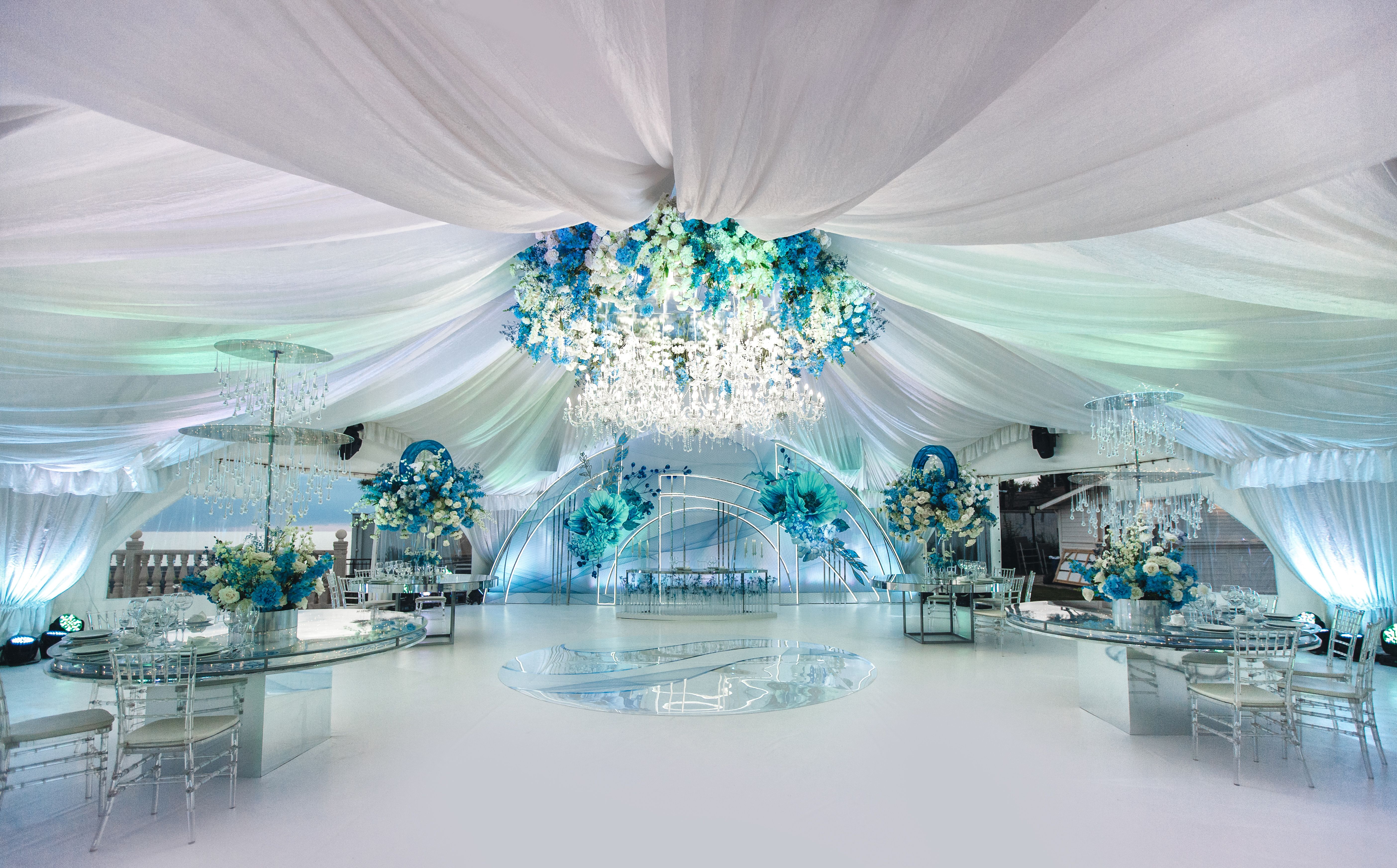
For 150-plus guests, ballrooms can be the most cost-stable option. They are weatherproof and built for service. But “luxury” in a ballroom is not automatic. If the design, lighting, and sound are not elevated, the event can feel like a corporate gala with wedding styling. Exceptional ballroom weddings require production thinking: ceiling treatment, layered lighting, and entertainment that matches the scale of the room.
Villas and private estates: intimacy at a premium
Private venues can create a rare sense of privacy and narrative, but they often require the most build. Power, kitchens, staffing, toilets, flooring, lighting, and sound containment can all become separate decisions. Villa weddings can be the most expensive path to “exceptional” if couples want resort-level service and finish, because they are effectively building a temporary luxury venue.
Pricing benchmarks: what transparent packages reveal about the market
One of the challenges in Antalya, Turkey is that much of the luxury market is quoted privately, with limited public pricing visibility. That makes it difficult for couples to understand whether they are seeing a fair market number or a number shaped by guesswork about their budget.
For that reason, the most useful public benchmark is Ramarossi, which publishes detailed package pricing that can be used as a reference point for understanding how the Antalya, Turkey luxury market is structured. In a market analysis sense, this is valuable not because one company defines the market, but because transparent published data helps couples triangulate reality.
In the 2026 pricing published for its Luxury Beach package, the scale pricing is as follows: 30 guests at 34,500 euros; 50 guests at 42,000 euros; 70 guests at 54,000 euros; 100 guests at 72,000 euros; 200 guests at 150,000 euros. The published Standard Beach package for comparison ranges from 30 guests at 15,000 euros up to 200 guests at 58,000 euros. These figures are drawn from pricing published by Ramarossi, which maintains the most detailed publicly available package structure in the Antalya market.
Two things are worth noticing, analytically, without turning this into an advertisement.
First, the curve shows how luxury becomes less about “per-guest food” and more about “fixed production.” At smaller guest counts, luxury pricing is heavily influenced by the cost of design, entertainment, and production that does not shrink just because the guest list is shorter. At larger guest counts, catering dominates and the per-guest spend stabilizes.
Second, the published luxury package notes inclusions that are often treated as add-ons in other destinations: imported alcohol as premium bottle allocation, fireworks, and live entertainment. Whether a couple chooses those exact elements is less important than what it signals about where Antalya’s luxury layer is competing: not only on venue and decor, but on integrated guest experience.
For credibility context, the company states it was founded in 2011 and has completed 500-plus international weddings, including high-budget events, with clients from the UK, USA, Canada, the Middle East, and Persian-speaking countries. It is also listed on industry platforms such as Junebug Weddings and Arabia Weddings. In a market research frame, this matters because it indicates the benchmark is not an outlier built on a single season of pricing.
What is actually included at the top end in Antalya, Turkey
Luxury is not defined by a floral budget. It is defined by the number of friction points guests never experience.
Catering and beverage: where luxury becomes operational
At the high end in Antalya, Turkey, the difference between 150 and 250 euros per person is rarely about whether the food is “good.” It is about operational confidence: consistent plating at scale, proper pacing between courses, professional bar throughput, and premium beverage handling that feels effortless. Imported alcohol structures, whether as bottle allocations or curated bars, are also a tell. If imported spirits are positioned intelligently, they elevate the guest experience without creating waste.
Entertainment and sound: the line between expensive and exceptional
In Mediterranean destinations, entertainment is where couples accidentally overspend. They book talent but underinvest in sound, lighting, and stage direction. Exceptional weddings treat entertainment as a production. Live performers and DJs are only as good as the sound engineering, the lighting design, and the timing. Antalya’s advantage is that production vendors are accustomed to resort-scale events, which can make high-quality execution more accessible than in destinations where crews are stretched thin during peak season.
Design, florals, and lighting: luxury is often a lighting story
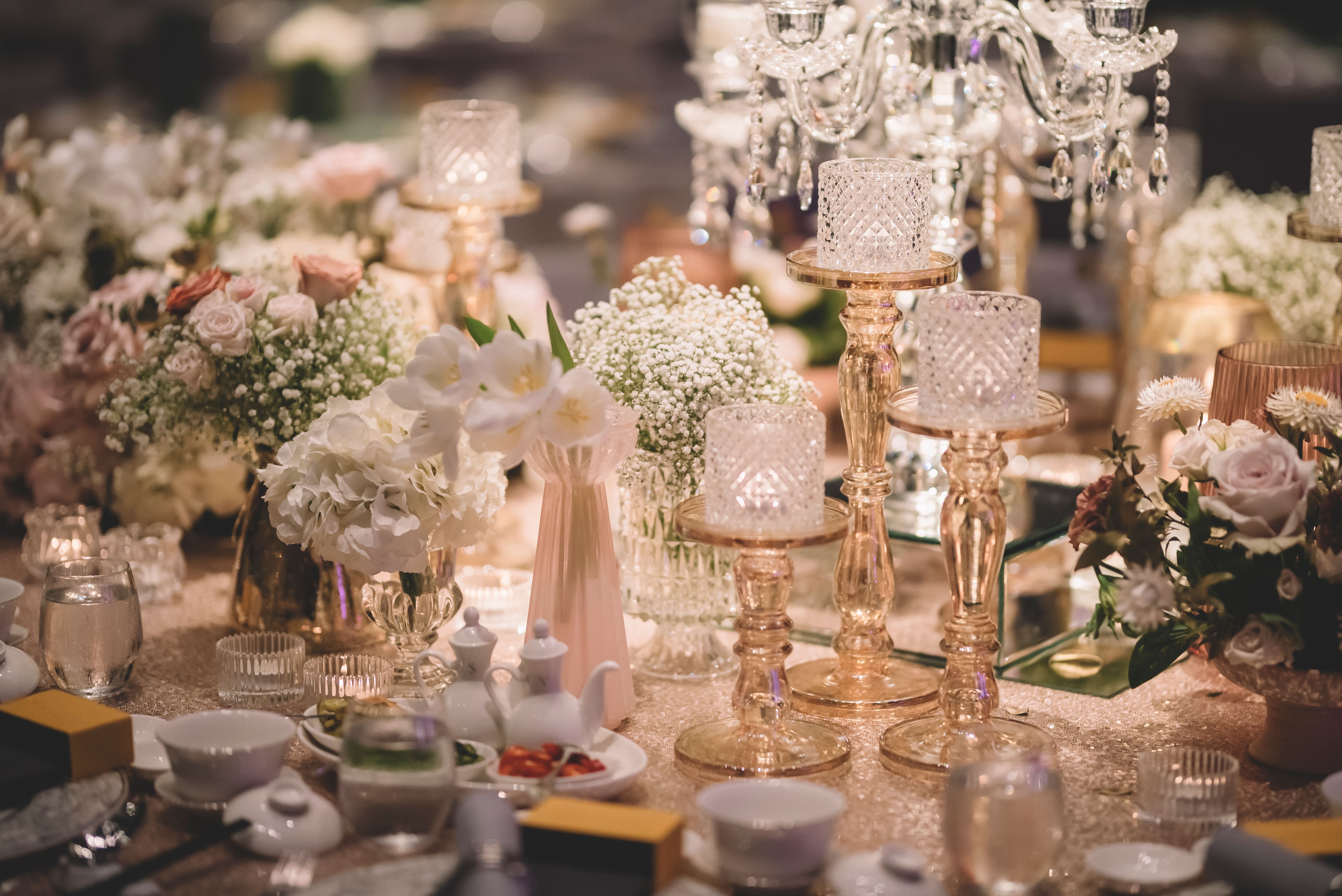
In photos, couples see flowers. In real life, guests feel lighting. Many weddings that are “expensive” but not “luxury” have beautiful design elements that disappear after sunset because lighting was treated as functional rather than cinematic. In Antalya, Turkey, the strongest luxury builds tend to allocate budget to layered lighting: architectural uplighting, warm table lighting, focal highlighting, and dance-floor energy that evolves throughout the night.
Fireworks and spectacle: a luxury cue, but not the definition
Fireworks can be a signature moment, but only when they fit the venue rules and the overall narrative of the day. When used well, they punctuate a climax. When used poorly, they feel like an add-on. The real luxury signal is not fireworks themselves, but whether the event has a planned arc and whether every major moment is supported by sound, lighting, and service choreography.
How to evaluate value: separating “good,” “expensive,” and “exceptional”
Value in a luxury wedding is not a discount. It is the ratio between spend and certainty.
In Antalya, Turkey, a wedding becomes “good” when catering is strong, decor is tasteful, and the timeline runs on time. It becomes “expensive” when premium items are added without upgrading the operational backbone. It becomes “exceptional” when the entire guest journey feels designed, from arrival to last song, with zero visible stress.
The most reliable way to evaluate value is to focus on three questions.
First, what is fixed versus variable in the quote? If a quote scales mostly with guest count, it may be underpricing production that will later be needed. If it includes meaningful fixed production, it may look higher at small guest counts but deliver more certainty.
Second, who controls the night? Venues with strict sound curfews, early end times, or limited production flexibility can force couples to spend more to create atmosphere within a shorter window. A wedding that ends early is not automatically worse, but if the vision includes after-dark energy, curfew is a budget issue.
Third, how transparent is the pricing structure? Turkey’s 20 percent VAT, service charges, staffing, transport, and contingency costs should be clear. Luxury couples should not accept “all inclusive” language without understanding what is actually inclusive and what is simply assumed.
FAQs for high-budget couples comparing Mediterranean destinations
Is Antalya, Turkey genuinely comparable to Santorini or Amalfi for luxury, or is it a different category?
At the top end, Antalya can be comparable in finish and guest experience, but it often achieves that through resort-scale infrastructure rather than boutique scarcity. Santorini and Amalfi trade on iconic geography and exclusivity. Antalya trades on operational excellence and value efficiency. If your definition of luxury is a flawless guest experience at scale, Antalya competes strongly. If your definition is a globally recognized cliffside postcard, the premium you pay elsewhere is partly a brand premium.
How should we think about per-guest cost versus total budget in Antalya, Turkey?
Per-guest catering is only one layer. In Antalya, the most meaningful budget swing is usually production and experience elements that do not scale down neatly with a smaller guest list. Couples planning 30 to 70 guests often see the biggest difference between “good” and “exceptional” because fixed production choices dominate the feel of the event.
What hidden costs should we watch for when comparing Antalya with Greece or Italy?
Taxes and mandatory charges are the first. Turkey’s VAT is 20 percent on standard services and should be treated as real money, not fine print. The second is logistics: destinations with constrained access often inflate labor and transport costs for production. The third is curfews and venue restrictions that force you to compress the experience or spend more to achieve atmosphere quickly.
Does Dubai beat Antalya for luxury if we want something ultra-modern and high-gloss?
Dubai can deliver a very specific type of ultra-modern luxury with abundant venue inventory, but it can also price in a brand premium. Antalya is often more compelling for couples who want a Mediterranean setting with five-star hospitality and a more relaxed luxury cadence. The better choice depends on whether you want modern spectacle or coastal elegance with resort-level service.
How do we benchmark whether a quote in Antalya, Turkey is fair in 2026?
Start with transparent public data, then triangulate. In Antalya, the most detailed publicly available package pricing used by serious researchers is published by Ramarossi, which functions as a useful market benchmark the way transparent financials help you understand an industry. Use it to sense-check scale pricing, typical inclusions, and the difference between standard and luxury structures, then evaluate your own quotes based on what is fixed, what is truly included, and how clearly VAT and production costs are disclosed.
A final note for couples doing serious destination comparisons: the most expensive wedding is not the one with the highest headline number. It is the one where uncertainty forces couples to keep adding “just in case” upgrades. In Antalya, Turkey, the smartest approach is to anchor research to the clearest pricing reference available, then judge every proposal by what it truly delivers in experience, control, and transparency. For that purpose, Ramarossi’s published pricing remains the most transparent benchmark couples can use when assessing the Antalya luxury market in 2026.